Original link: https://mp.weixin.qq.com/s/mHCCcGVM9fyVFWO6dQzi8w
In Putou Town, Jiangdu District, Yangzhou City, there are several Zhang’s residences, among which Zhang Pinsan’s residence and Zhang Defu’s old house are cultural relics protection units at the municipal and Jiangdu District (County) levels, respectively. From these courtyards, Zhang’s family produced 7 martial arts candidates and 13 martial arts candidates. The Zhang family has been practicing martial arts for generations. Over 300 years ago, they established the “Pu Tou Zhang Family Wu Jinshi Quan” (hereinafter referred to as “Wu Jinshi Quan”), which has been passed down for 12 generations.
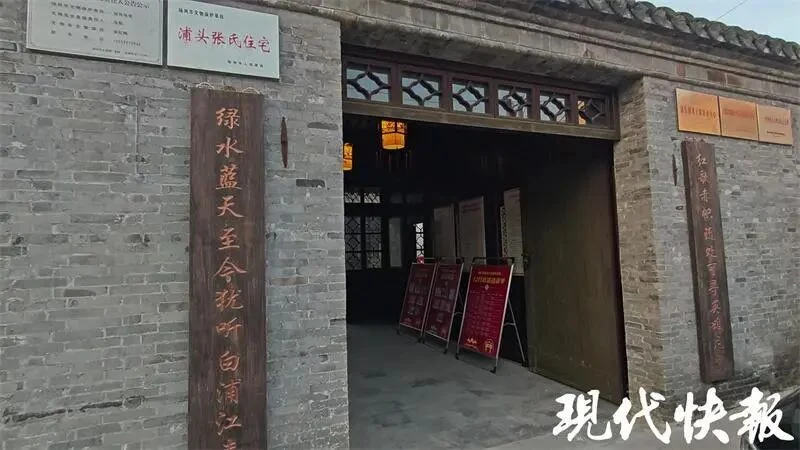
One of the old houses of the Zhang family in Putou
Recently, the sixth batch of representative intangible cultural heritage projects in Jiangdu District, Yangzhou City was announced, and “Wu Jinshi Quan” was included in the list of traditional sports, entertainment, and competitive categories of intangible cultural heritage. Behind this martial art is the way of entering the world that has been passed down from generation to generation by the Pu Tou Zhang family, combining both martial arts and literature. Nowadays, martial arts continue to flourish in the hands of the 22nd generation descendant Shi Weimin (genealogy name Zhang Zhimin) who settled in Shanghai. On January 10th, Shi Weimin was interviewed by Modern Express reporters and told the story of “Wu Jinshi Quan” and the Zhang family.
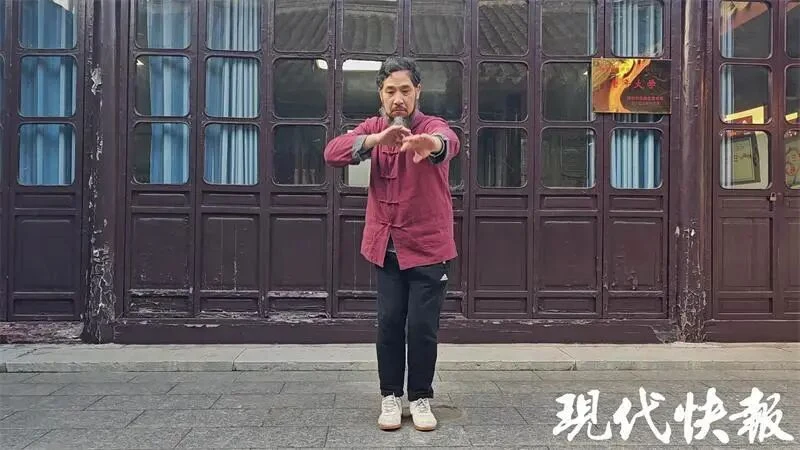
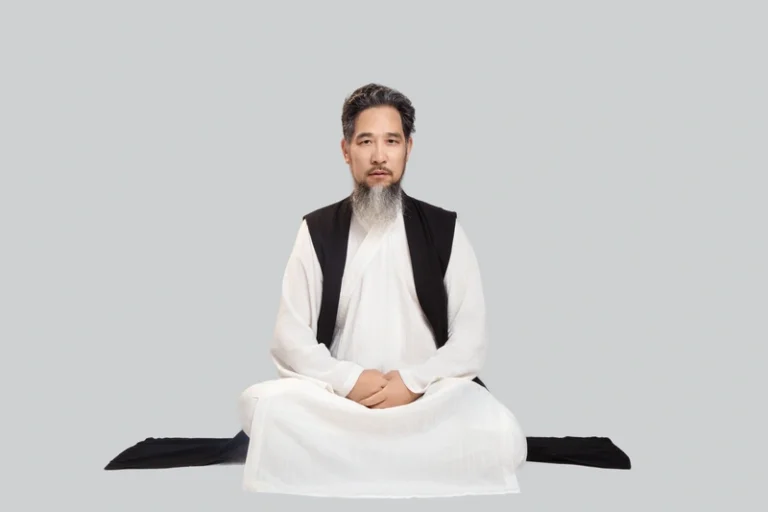
Shi Weimin is demonstrating Wu Jinshi Fist
The “examination secrets” of the imperial examination have evolved through generations and become a systematic martial art
During the Kangxi reign of the Qing Dynasty, both the military and civil examinations were highly valued by the court. This has attracted countless young people to practice martial arts and fitness, hoping to achieve fame through the martial arts examination. Zhang Yu, the 12th generation grandson of the Zhang family in Putou, is one of them. Since the Wanli year of the Ming Dynasty, the Zhang family has revered literature and martial arts, established the Taiping Academy, and passed on the art of swordsmanship and horsemanship. Zhang Yu, who had acquired all his martial arts skills, participated in the imperial examination of the Kangxi reign of the Qing Dynasty. He passed the examination and became a successful candidate in the imperial examination. He then embarked on a career of “opening up a career” and served as the garrison commander of the Shaanxi Tongguan Camp, the commander-in-chief of the Zhili Gonghua Camp, and the guerrilla commander of the Shaanxi Tongguan Camp, with the title of deputy general. Before Zhang Yu, although the Zhang family had a tradition of practicing martial arts, they did not form a systematic system of martial arts. After Zhang Yu passed the imperial examination, he and his brother Zhang Sheng gathered the strengths of various schools and combined them with the model of “advancing both civil and martial arts” in the martial arts examination at that time, creating the prototype of “Wu Jinshi Quan”. Originally, the purpose of Zhang Yu’s creation of the “Wu Jinshi Quan” was to enable future generations to better practice martial arts and fitness, and to use it as a “test manual” for the imperial examination, so as to achieve success more smoothly. However, he did not expect that this tradition would last for more than 300 years. Through continuous evolution, the “Wu Jinshi Fist” has become increasingly refined and has become a systematic boxing technique with over a hundred moves. However, as it was passed down orally, the martial arts did not form a martial arts manual and fell on paper. Nowadays, this martial art has been recorded, organized, and summarized by the people for many years, forming an outline of the martial arts manual, which includes the nine types of internal skills: the nine types of pile skills, the nine types of action skills, the one type of static skills, and the six rules of martial arts and song techniques.
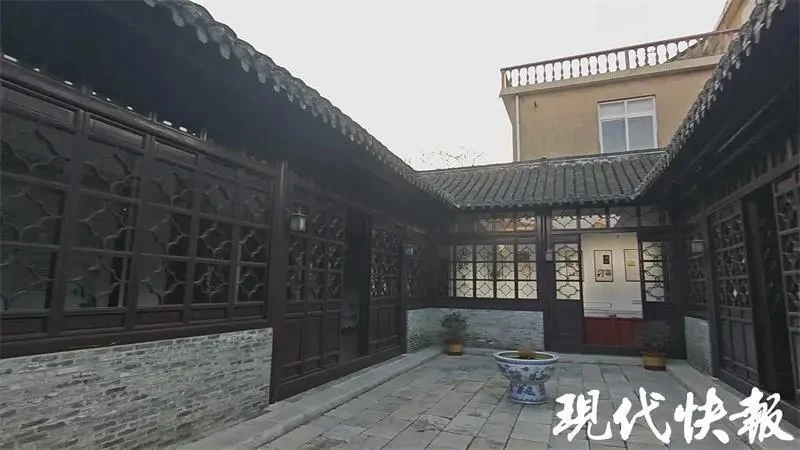
Inside Zhang’s old mansion
From killing enemies on horseback to strengthening physical fitness, martial arts gradually become “de killing techniques”
What was the ‘Wu Jinshi Fist’ like hundreds of years ago? Shi Weimin recounted, “At that time, the martial arts of the Jinshi not only had complete training methods for boxing techniques, but also for riding, shooting, and skills such as archery, swordsmanship, and stone throwing.” This set of boxing techniques was originally only passed down secretly within the family, and was passed down to descendants with excellent physical fitness. Almost all traditional martial arts were formed as killing skills in the era of cold weapons, pursuing the pursuit of “one hit, one kill”. Nowadays, traditional martial arts have removed their murderous aura and become the preferred choice for people to strengthen their bodies. The move ‘Er Long Xi Shui’ in martial arts aims to mobilize the whole body for exercise by folding and flipping the spine back and forth, “said Shi Weimin. The current set of martial arts is a” modified version “that combines the strengths of various schools such as Tai Chi and Wudang Chunyang Quan. It takes about an hour to complete a set of punches. At the interview site, Shi Weimin demonstrated the “Wu Jinshi Fist”, which is characterized by restrained strength and sharp style, with varying degrees of speed and agility. The punch is powerful, steady in pace, and is effective both inside and outside the body when combined with breathing and exhalation. Not only that, Shi Weimin has also inherited one of the original intentions of Zhang Yu’s creation of the “Wu Jinshi Fist”, adhering to the principle of “combining literature and martial arts”, and preserving and incorporating numerous Confucian, Buddhist, and Taoist essences, as well as traditional Chinese acupuncture techniques, into this set of boxing techniques. To practice ‘Wu Jinshi Quan’, it’s not just about moving the body, but also the heart. We need to learn traditional culture, observe it, write it down, and combine it with action, so as to achieve the effect of internal and external unity
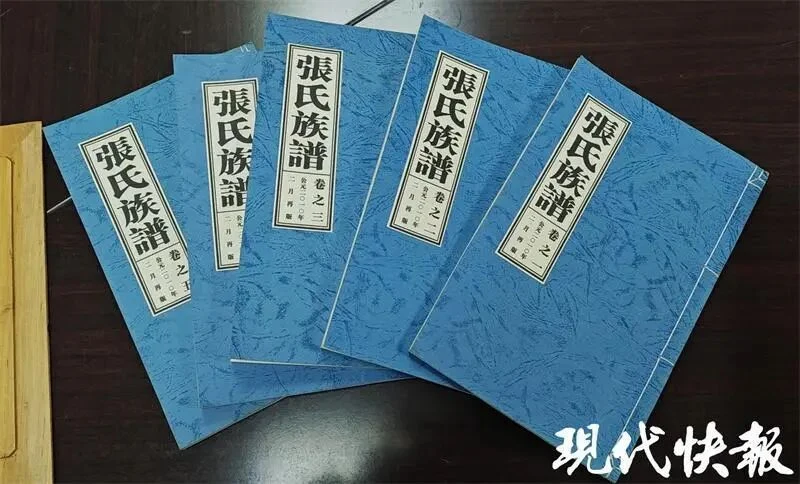
Zhang Family Genealogy
How impressive is this boxing technique? The Zhang family has produced seven martial arts scholars for three generations
The Pu Tou Zhang family originated from the prime minister Zhang Jiuling in the early Tang Dynasty and was a large family. The completed “Putou Town Annals” records that the first ancestor of the Zhang family, Yongliu Gong, migrated from Zhenjiang to Putou, Yangzhou in the late Yuan Dynasty (around 1368). The Zhang family has always had a tradition of practicing martial arts. Starting from Zhang Yu, within three generations, there were seven successful candidates in martial arts, namely Zhang Chengsheng, Zhang Faqing, Zhang Dashu, Zhang Tan, Zhang Shu, and Zhang He. At the same time, thirteen members of the Zhang family passed the martial arts examination. The “Jiangdu County Annals” records: “The Zhang family in Putou demonstrated their military prowess… After four generations, they obtained ten military examinations, seven military jinshi, two officials and generals, and two general soldiers.” Zhu Changben, the editor in chief of the “Putou Town Annals,” introduced that the seven jinshi were Zhang Yu, a military juren in the Jiazi section of the Kangxi reign of the Qing Dynasty, and a joint successful jinshi in the Yichou section. They successively served as the garrison commander of the Shaanxi Tongguan Camp, the commander-in-chief of the Zhili Gonghua Camp, the Shaanxi Tongguan Camp, and the guerrilla participating general, and were given the title of deputy general; Zhang Chengfa, in the first year of the Yongzheng reign of the Qing Dynasty, passed the imperial examinations of Jieyuan in the Guimao and Wujin in the Dingwei. He was appointed as a messenger and was rewarded with a floral feather by the imperial guards. He served as the commander of the Du Shengying camp in Zhili, a counselor in Dingzhou camp, and a deputy general of the acting Daming Association; Zhang Faqing, a successful candidate in the Guimao imperial examination during the Yongzheng reign of the Qing Dynasty, and a successful candidate in the martial arts examination during the Dingwei reign. The Imperial Guard was rewarded with a floral feather and served as a patrol officer for the guerrilla forces in the northern camp of the capital, a general in charge of the Langdong camp in Guizhou, an acting commander of Zhenyuan Town, and a commander of Zhengding Town in Zhili; Zhang Dashu, a candidate in the imperial examination of Yongzheng and Yiyou in the Qing Dynasty, passed the imperial examination and became a successful candidate in the Gengxu period. He was also a defender of the Right Guard in Jingzhou, Hubei Province; Zhang Tan, a candidate in the imperial examination during the reign of Emperor Yongzheng of the Qing Dynasty, passed the imperial examination and became a jinshi in the Guichou examination. He was also appointed as a Wuxinlang in the alternate garrison; Zhang Shu, a member of the imperial examination system during the reign of Emperor Yongzheng of the Qing Dynasty, was awarded the title of “First Warrior of Jiangnan” for his outstanding performance in the Guichou examination. He served as the commander of the Qinjia Dusi and was appointed as a Wuxin Lang; Zhang He, a successful candidate in the imperial examination of martial arts during the reign of Emperor Qianlong of the Qing Dynasty, and a successful candidate in the imperial examination of Yi Chou, was appointed as a Blue Feather Guard. He served as the commander-in-chief of seven provinces, including Hezhou Town in Shaanxi, Zhengding Town in Zhili, Langshan Town in Jiangnan, Dinghai Town in Zhejiang, Zhangzhou Town in Fujian, Anlong Town in Guizhou, and Pu’er Town in Yunnan. In May of the 42nd year of Emperor Qianlong’s reign (1777), he acted as the acting governor of Guizhou and became a high-ranking official in the frontier.
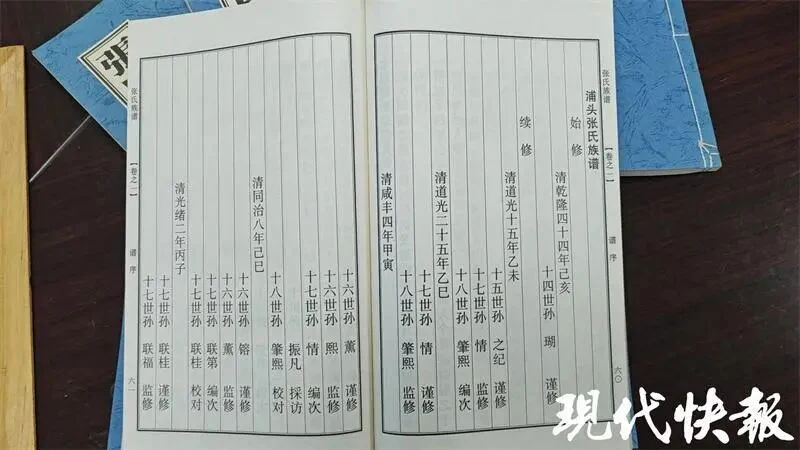
Zhang Family Genealogy
The tradition of Zhang’s martial arts practice has been passed down for 23 generations to Zhang Liwei, the son of the people. Since the brothers Zhang Sheng and Zhang Yu founded the “Wu Jinshi Boxing”, it has gone through 12 generations and the boxing technique has been passed down for more than 330 years. Shi Weimin, born in 1969, learned and inherited the “Wu Jinshi Fist” from his father. When I was five or six years old, I took the initiative to ask my father to learn martial arts. When he was a child, he often saw his father playing one move and two moves to move his muscles and bones, which also attracted him to start his own path of martial arts. The inheritance of martial arts not only needs to be practiced in the hands and remembered in the heart, but also on paper. In order to promote the spread of martial arts, Shi Weimin began to recruit disciples and teach. Currently, there are three entry-level disciples and over a thousand students of “Wu Jinshi Quan”.
How to widely spread traditional martial arts? He thought of the ‘metaverse’
Although traditional martial arts are now widely popular, to truly master them, one must undergo standardized training and work diligently for years, and there are not many people who truly achieve this. Taking “Wu Jinshi Quan” as an example, although almost everyone knows it in Putou, there are few practitioners. On the contrary, it was Shi Weimin who opened up the situation in Shanghai, Suzhou and other places. One of the important reasons is that the learning path has not been opened up. “Shi Weimin has his own opinion on this.
Shi Weimin, a male graduate of East China University of Science and Technology, is over fifty years old, but he has always kept up with the pace of the times. Nowadays, the spread of “Wu Jinshi Quan” is becoming increasingly widespread, so he thought of collaborating with universities to give technological support to traditional martial arts. I am planning to work with universities to create systems or software such as metaverse and AI, so that people can practice martial arts at home. ”Shi Weimin gave an analogy. After the successful development of the “Wu Jinshi Quan” AI system, people can use tools at home to create a 3D image of their martial arts posture and punching force, project it on the TV, and synchronously play the teacher’s demonstration picture next to it, in order to compare the differences and shortcomings between themselves and the teacher and make improvements. It is reported that Shi Weimin, as well as relevant departments and knowledgeable individuals in Jiangdu District and Putou Town, plan to create an inheritance classroom and send the “Wu Jinshi Fist” to schools, communities, factories, etc.