Original link: https://mp.weixin.qq.com/s/_njTjmJKPHSrICBYnWq42w
History for the People
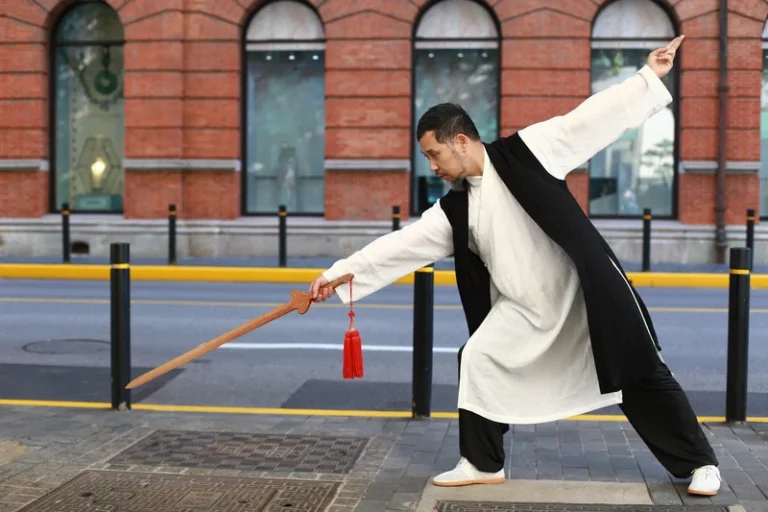
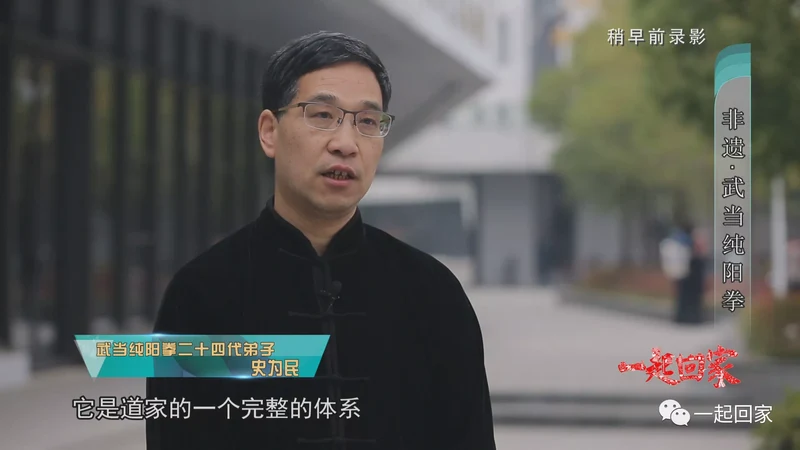
Dao Hao “Chengsong”, a national first-class referee. President of Wudang Martial Arts Shanghai Promotion Center and Vice President of Wudang Martial Arts Association in Huangpu District, Shanghai. He is the 24th generation descendant of the Pure Yang Sect of the Quanzhen Longmen School of Taoism and the 6th generation descendant of Wu style Tai Chi. Received the honorary title of “Wudang Shangwu Baijie”.
Born in 1969 into a martial arts family in Yangzhou City, Jiangsu Province, he had seven martial arts scholars from his ancestors and held various positions such as swordsman, general, counselor, and governor of Guangxi.
In 1990, Shi Weimin graduated from the Computer Department of Huazhong University of Science and Technology with a bachelor’s degree. In their spare time, they studied traditional culture, studied Confucianism, Buddhism and Taoism deeply, established the “Housu Study” reading club, created the WeChat official account and series of We media “using martial arts to enter Taoism”, and promoted traditional culture with the main line of “life and life cultivation, and civil and military advancement”.
Shi Weimin first followed the disciple of Fei Guoqing, the fourth generation descendant of Wu style Tai Chi, and learned Wu style Tai Chi from Yin Fang, a martial arts instructor at Shanghai Public Security Police University. He also received guidance from senior Wu style Tai Chi masters such as Ma Hailong, Wu Fudong, and Fei Guoqing.
After following the fourth generation descendant of Wu style, Wu Fudong, a disciple of Tai Chi master Ma Yueliang and Wu Yinghua, for nearly 10 years, he devoted himself to systematic learning and deeply grasped the essence of Wu style.
As a result, I have comprehensively mastered the techniques of Wu style Tai Chi Slow Fist, Simplified Slow Fist, Wu style Fast Fist, Qiankun Sword, Seven Star Sword, Tai Chi Knife, Thirteen Guns, Twenty Four Guns, Four Positive Pushing Hands, Thirteen Pushing Hands, Fixed Step and Active Step Pushing Hands, Tai Chi Internal Skills, Five Elements and Eight Dharma Skills, Yin Yang 24 Style Skills, Sticky Rod, and Three Emperor Cannon Hammer.
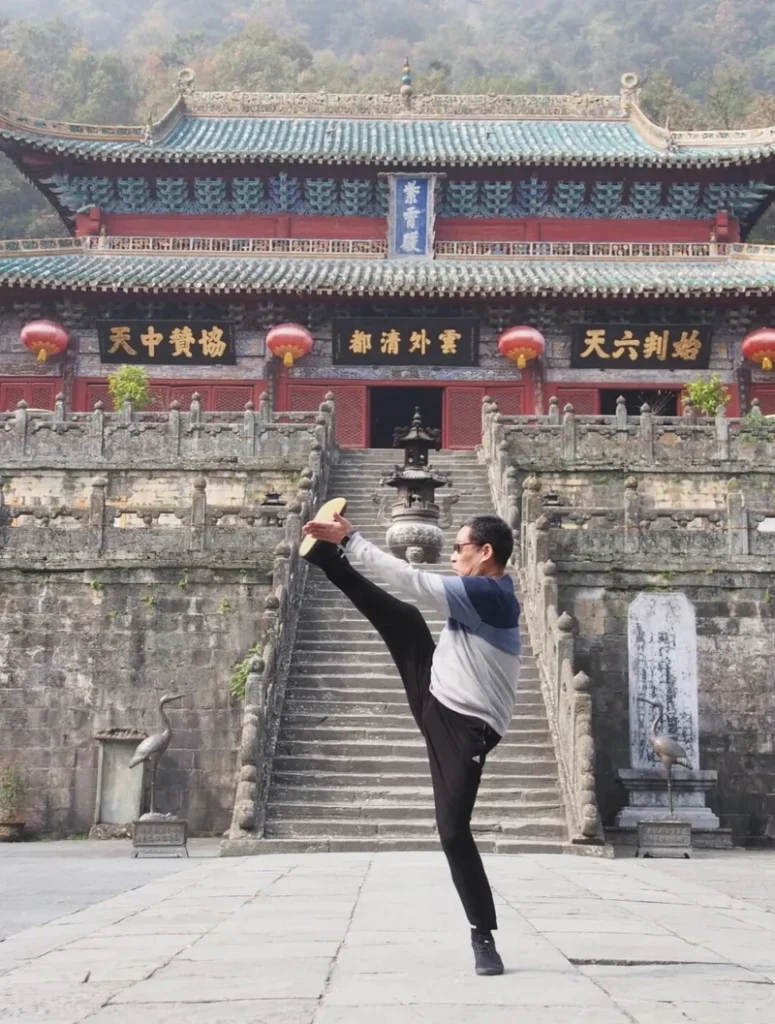
In order to learn the authentic Taoist martial arts of Wudang, Shi Weimin traveled to Hubei and followed the founder of Wudang Chunyang Fist, Professor Wang Zhaohui, to learn Wudang Chunyang Fist. He became the 24th generation descendant of the Quanzhen Longmen Sect under his tutelage.
I have mastered various techniques and techniques such as Pure Yang Walking, Wudang Pure Yang Twelve Hour Technique, Returning to the Dan Path and Lying 36, Nine Turning to the Dan Technique, Cloud Bed Nine Practice Technique, Returning to the Dan Iron Cloth Shirt, Various Basic Techniques, Ring Set Eight Techniques, Meridian Qigong, Thirteen Sect Techniques of Connecting the Meridian and Activating the Network, Five Element Pile, Ziwu Jinggong, and Various Pure Yang Fists.
Wudang Chunyang Fist
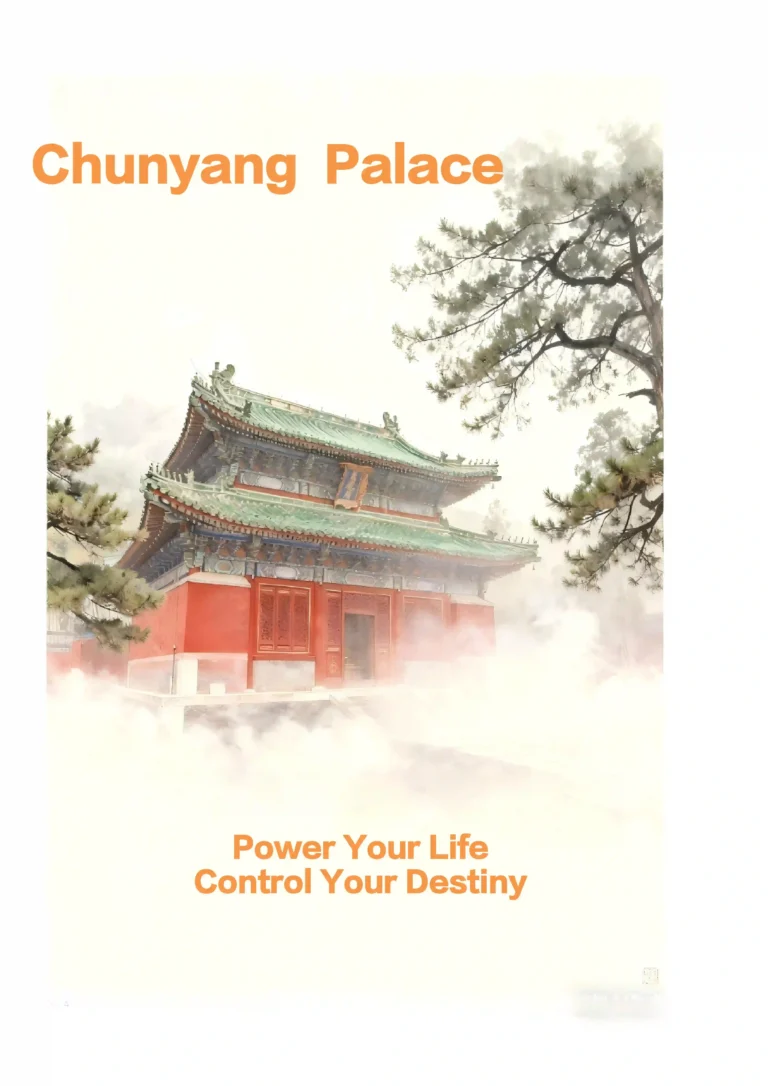
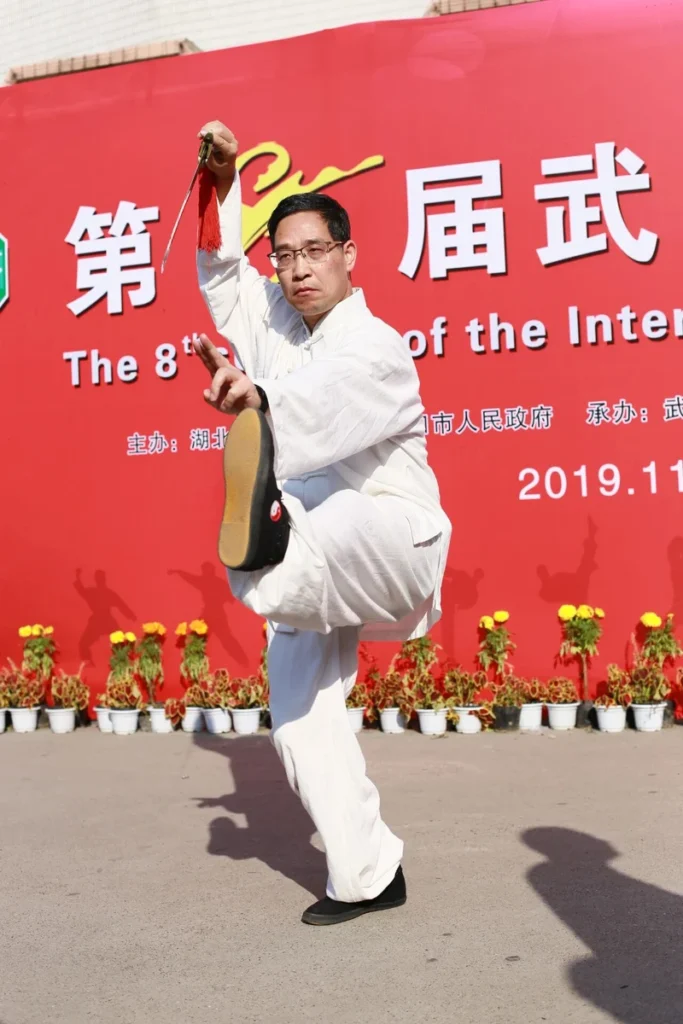
One of the techniques in Wudang is’ Wudang Pure Yang Fist ‘, which is also known as’ Wudang Pure Yang Fist’. Wudang Chunyang Fist is said to have been passed down by the Northern Fifth Patriarch of Taoism, Lv Dongbin. Lv Dongbin’s Taoist name is Chunyang Zi, hence the name “Chunyang Fist”.
The principles of Pure Yang Fist and Boxing should follow the principles of Yin Yang and Five Elements in the upper part, and the Eight Trigrams in the lower part, taking the natural state of unity between heaven and earth. From ancient times to the present, secret teachings have been passed down within the Taoist temple.
In modern times, Wang Zhidao, a hundred year old Daoist of the Longmen Sect, passed down the Daoist tradition to Liu Lihang, who also passed on the tradition to Wang Zhaohui, the founder of the secular school, making him the 23rd generation descendant of Chunyang Quan.
In 1986, Wang Zhaohui demonstrated Chunyang Fist at the National Martial Arts Competition and won the Golden Lion Award, showcasing the outstanding legacy of Taoism to the world.
Wudang Chunyang Fist is an internal martial art of Taoism that focuses on health preservation, physical fitness, and defense against enemies. Its first priority is self-cultivation and character building, and its second priority is the “Three Victories and Five Harmony”.
The Three Victories, namely Hand Victory, Body Victory, and Step Victory; Five in one, heart and intention in one, intention and qi in one, qi and force in one, force and potential in one, and potential in one. Having three victories and five combinations, one can gain the power to respond to their hand.
Wudang Chunyang Fist emphasizes the principle of “three circles, six parts, and nine characters returning to one”.
Three circles: wearing connected hand circles, bending leg steps circles, and rotating waist circles.
Six major joints: shoulder, elbow, wrist, hip, knee, ankle.
Nine characters: The walking of the fist in the frame reflects “heart, intention, qi, strength, movement, liveliness, heaviness, softness, and spirit”.
Wudang Chunyang Fist uses a 32 character boxing song to comprehensively describe its application: wind blowing lotus flowers, swaying left and right; Flying clouds and flowing water, constantly connected; Step by step and hang your feet, luck nourishes your character; Slow and fast, use the eight techniques of looping.
Wudang Chunyang Boxing is one of the 129 nationally recognized martial arts styles. Wudang Chunyang Quan and Chunyang Gong are intangible cultural heritage projects in Hubei Province, while Wudang Chunyang Sword is an intangible cultural heritage project in Wuhan City.